Bronze & Wood |
|
Rudolph Thiem did not carve in stone except to do lettering. He evidently carved the names of war veterans for the interior marble walls of Soldiers, Sailors and Pioneers Monument. And he carved the lettering on his wife Anna’s gravestone, and presumably on his own. Thiem also designed the imposing obelisk for Dr. J. B. Scott in Hamilton Ohio's Greenwood Cemetery. The restrained ornamentation draws on Gothic motifs. Thiem himself probably did not work the stone, but left the execution of the design to stone cutters.
Wood, it seems, was Thiem’s favorite material, followed by bronze (with models done in clay and wax). This page shows the range of his work in these two media, from different periods of his life. The bronze pieces on this page are, for the most part, presented chronologically. The art furniture and other carvings in wood are not. Most of them cannot be dated. The first piece included here is neither bronze nor wood. It is a plaster cast of a biracial “Group of Cotton Yardmen.” The faint photograph of the cast is the only known representation of a work Thiem executed during his New Orleans period (1881-1886). He and Paul Riess, his collaborator, may have intended to cast this remarkable piece in metal. No copy, either in plaster or metal, is known to have survived. |
A Plaster Cast: “Group of Three Cotton Yardmen”
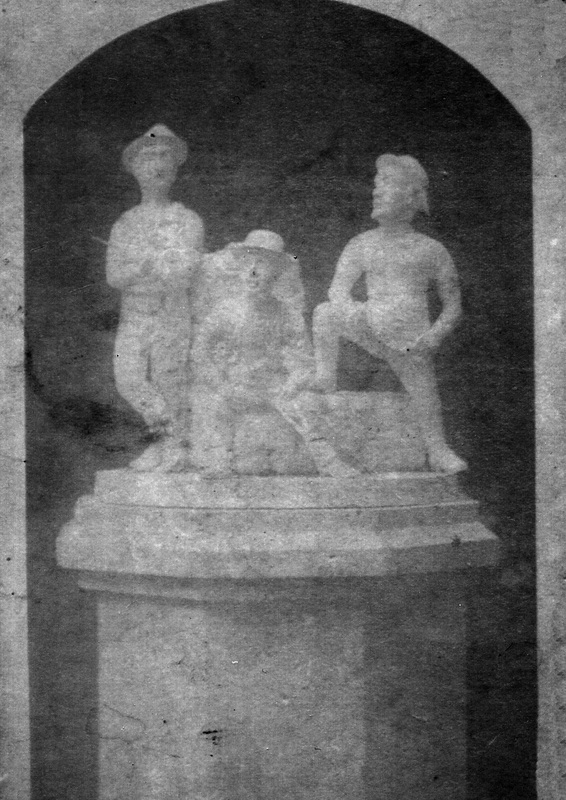
In New Orleans, Paul Riess, the founder, and Rudolph Thiem, the young designer, partnered together in producing art works and statuary. Their studio/foundry, active in the mid 1880s, was at the corner of Tschoupitoulas and Erato Streets. This photograph makes up the reverse side of a raffle ticket for the benefit of the victims of the flood that devastated southern Louisiana in 1882. The winner of the raffle would receive the original plaster cast, which represented workers of a cotton press. This is the only known representation of an art work that the firm Riess and Thiem produced.
|
The cotton press crew is biracial. It is worth noting the background to this subject matter. In 1880 and 1881, both the black and white cottonyard workers unions in New Orleans joined together in successful strikes. On Sept. 11, 1881, a police sergeant shot and killed an unarmed black teamster, James Hawkins, during a demonstration. This unwarranted killing galvanized the labor movement and set off further demonstrations. The cotton yardmen unions then succeeded in negotiating better pay and work conditions from their employers. It is interesting that Thiem and Riess chose the subject of cotton yardmen for a work of art. The subject was timely, but also controversial, and the depiction of common workers unusual. What did the sculptors intend to convey by this work? How does it interpret, if at all, the labor strife of the period? How was the work received? It can only be said here that their choice of subject alone showed that Thiem and Riess showed no fear of plunging into the tempestuous politics of their day.
Arnesen, Eric. Waterfront Workers of New Orleans. Race, Class, and Politics, 1863-1923. Urbana: University of Illinois Press, 1994, esp. pp. 34, 61-72. Mahe, John A. II et al. Encyclopaedia of New Orleans Artists 1718-1918. New Orleans: Historic New Orleans Collection, 1987. Articles on Rudolph Thiem and Paul Riess. |
Works in Bronze |
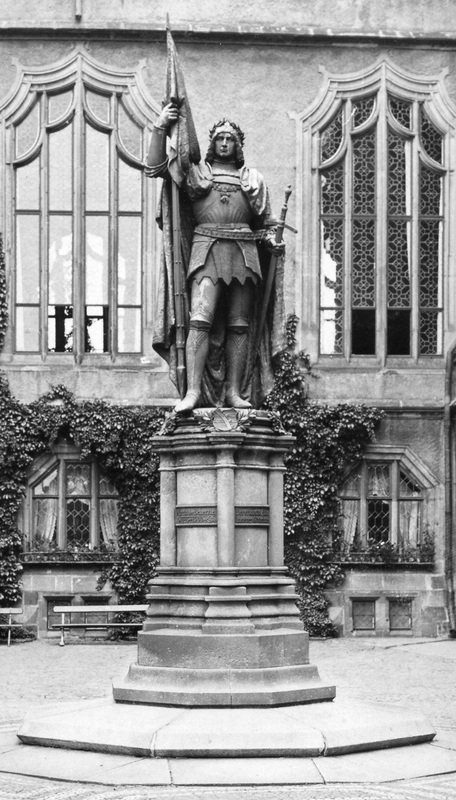
Rudolph Thiem modelled parts of this statue when he still lived in Germany. It is the earliest known example of his work as a sculptor/modeller. The overlife-size bronze figure, which was about 12 feet high, represented Duke Albrecht the Spirited (1443-1500). Dresden sculptor Hermann Hultzsch designed the statue, and it was placed in the courtyard of the Albrecht Castle (Albrechtsburg) in Meissen. Rudolph Thiem, 19 years old, was Hultzsch’s modelling assistant for the piece, which was completed in 1876. In 1947 or 1948, the statue was taken apart and melted down by the East Germans. This undated photograph was probably taken around 1900. Courtesy of the Albrechtsburg Museum.
|
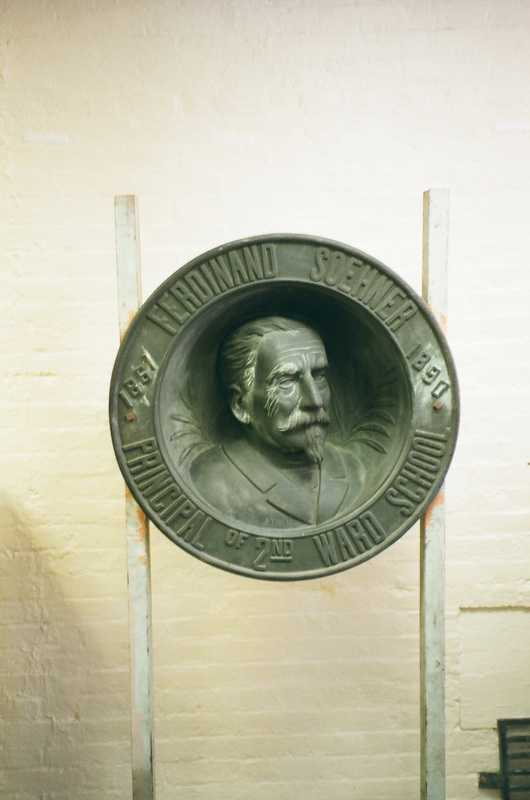
Thiem designed this large bronze medallion of the Hamilton educator Ferdinand Soehner (1821-1890) around 1895. It was commissioned by the Soehner Memorial Society. Diameter is just over 30 inches. The head is 13 inches in height. The bust is in high relief. This medallion hung for many years on the front of the Second Ward School, of which Soehner, an emigrant from Germany, was principal. Soehner died in a mishap on the interurban railway linking Hamilton and Cincinnati. The medallion is now displayed in the Butler County Museum, Hamilton. Photo by Natalie Bolton. Courtesy of the Butler County Museum, Hamilton, Ohio.
|
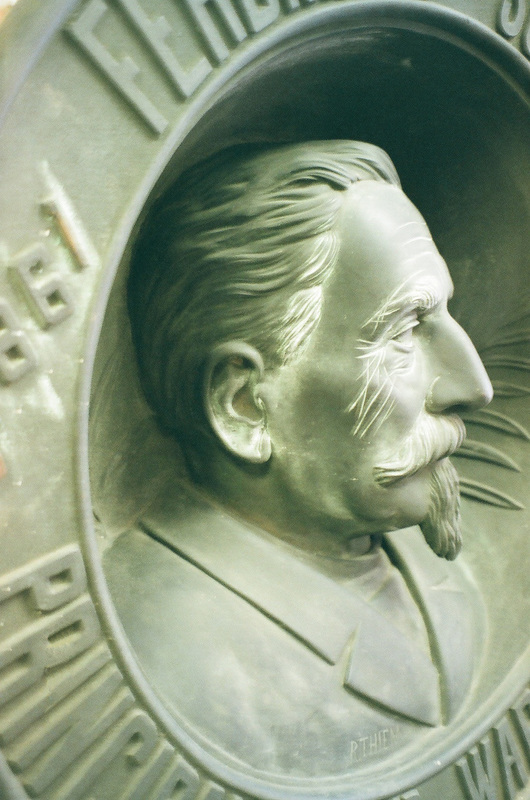
Photo by Jon Thiem. Courtesy of the Butler County Museum.
|
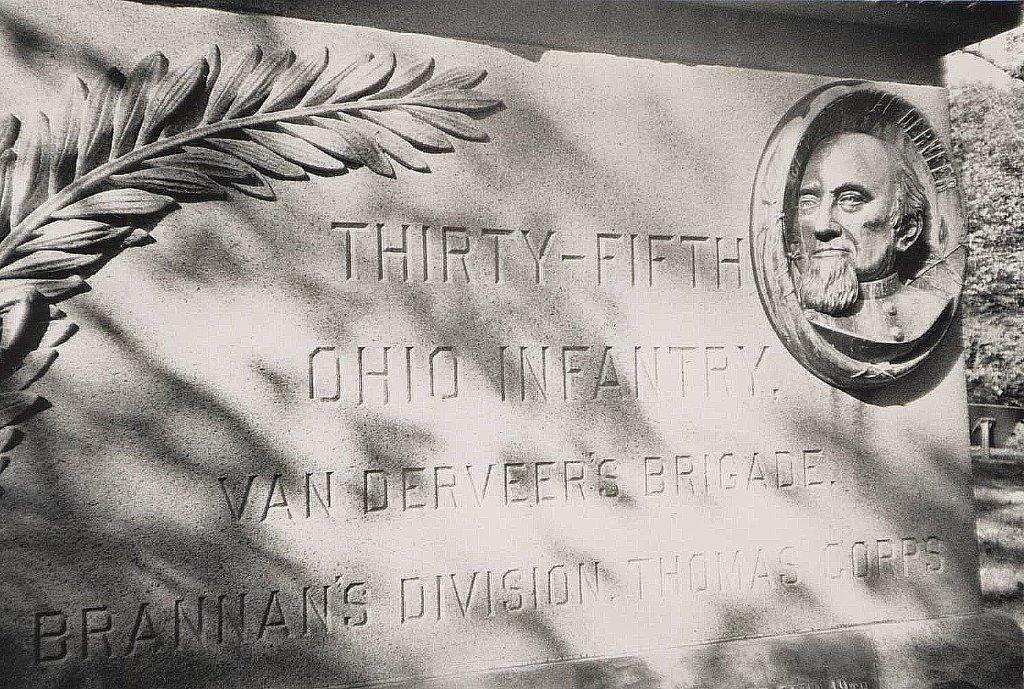
Thiem received the commission for this bronze Civil War medallion from the 35th Ohio Volunteers Association in 1897. The medallion, measuring 15 1/2 inches by 18 1/2 inches, was cast in that year at the Hamilton Brass Foundry. The portrait represents Colonel Ferdinand Vanderveer (1825-1892), one of the most effective brigade commanders at Chickamauga (1863). Vanderveer was also the first commander of the 35th Ohio Volunteers regiment. A contemporary news article reported that the “bust of General VanDerveer stands out in fine relief and is a most striking likeness and of a very high order of workmanship.” In September 1897, the medallion, was taken to Snodgrass Hill, Chickamauga National Battlefield, Georgia, and affixed to the stone monument for the 35th Ohio Volunteers there. In 1994, unknown thieves or vandals pried the medallion from the monument and stole it, probably for the value of the bronze. Photo is courtesy of the MidPointe Library System, Middletown, Ohio.
|
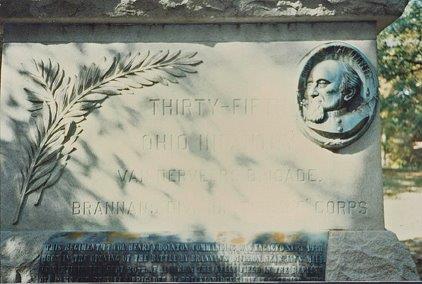
Photo is courtesy of the Midpointe Library System, Middletown, Ohio.
|
|
“Gen. Ferd Vanderveer” “His Medallion Finished For the 35th Monument at Chickamauga—Fine Work,” Hamilton Daily News, June 30, 1897. np. (clipping in the Butler County Historical Collection, the Journal-News archive).
|
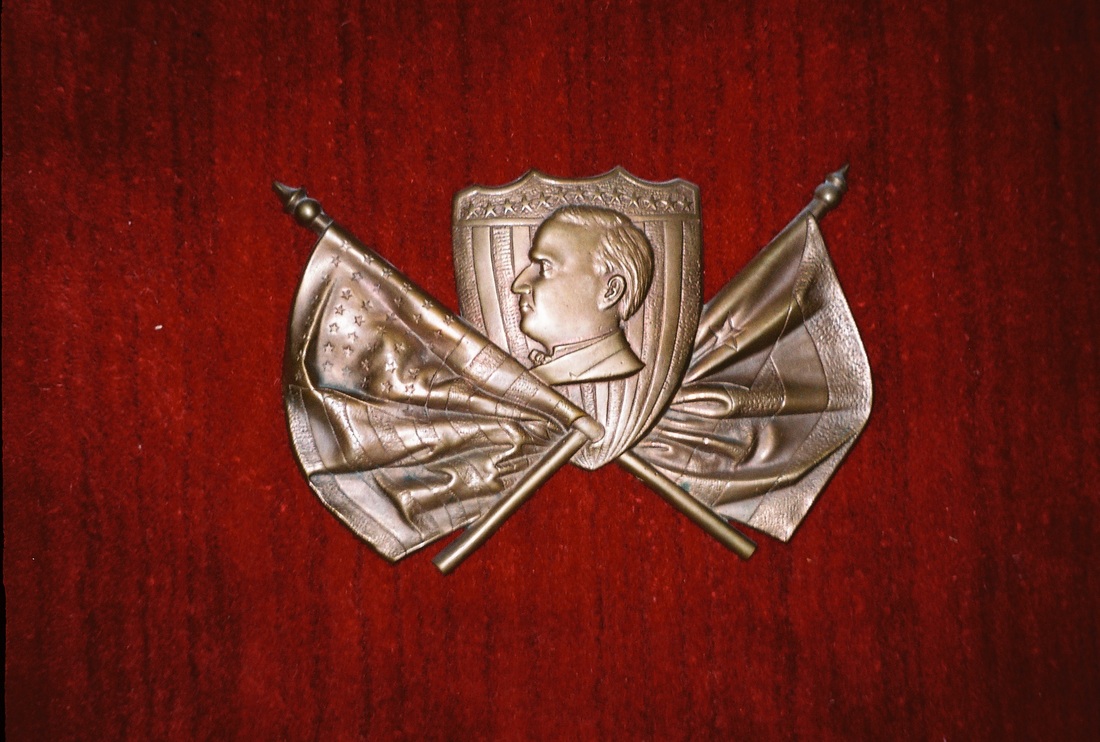
For the 1896 presidential contest between William McKinley (R) and William Jennings Bryan (D), Thiem designed and sold “plaque figures” of the two candidates. This bronze plaque of McKinley is 9 3/4 by 6 3/4 inches. The plaques Thiem sold may have been bronzed zinc. At some point he also made a bronze bust of McKinley, who wrote the designer a letter of thanks. The plaster model for that bust was lost in the flood of 1913. Photo by Jon Thiem.
|
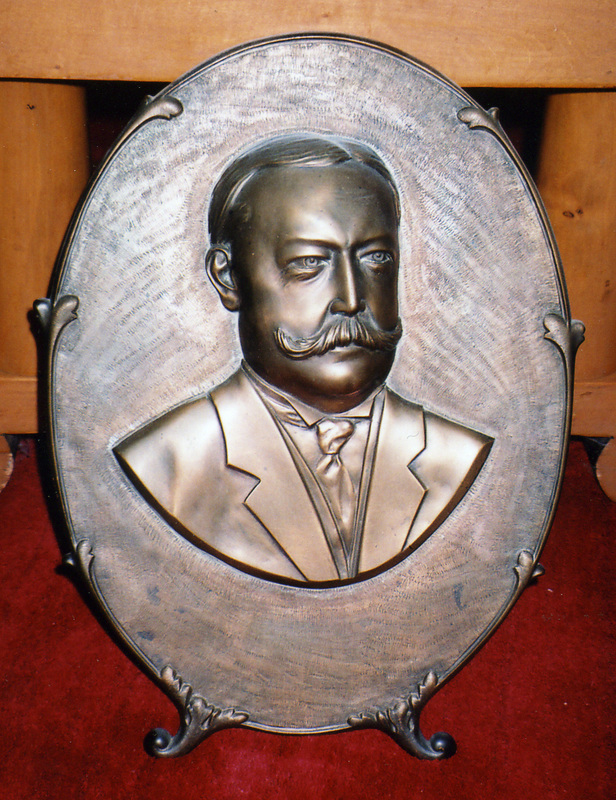
This bronze bust of William Howard Taft measures 14 1/2 by 11 inches, with the head alone 5 1/2 inches high. This piece has no date. Thiem possibly created it for the 1908 election, which Taft won, defeating William Jennings Bryan. Taft reportedly visited Thiem in Hamilton to thank him for the bust. Photo by Jon Thiem
|
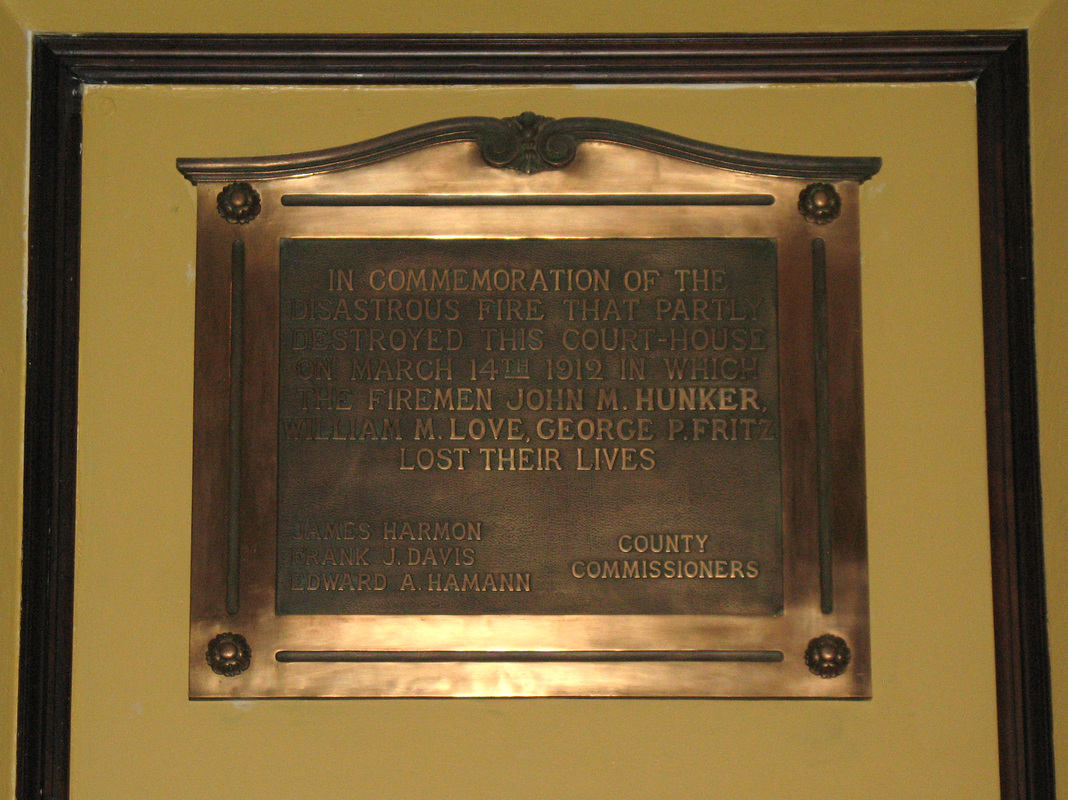
On March 14, 1912, the Butler County Court House caught on fire. Three Hamilton firemen battling the blaze died when the burning tower collapsed on them. The building, which remained standing, was refurbished. Butler County Commissioners contracted with Thiem to design this memorial tablet, which is in bronze, and measures 27 by 30 inches. The tablet was completed in April 1914, and mounted in the Court House lobby, on the second floor. Photo is courtesy of Natalie Bolton.
|
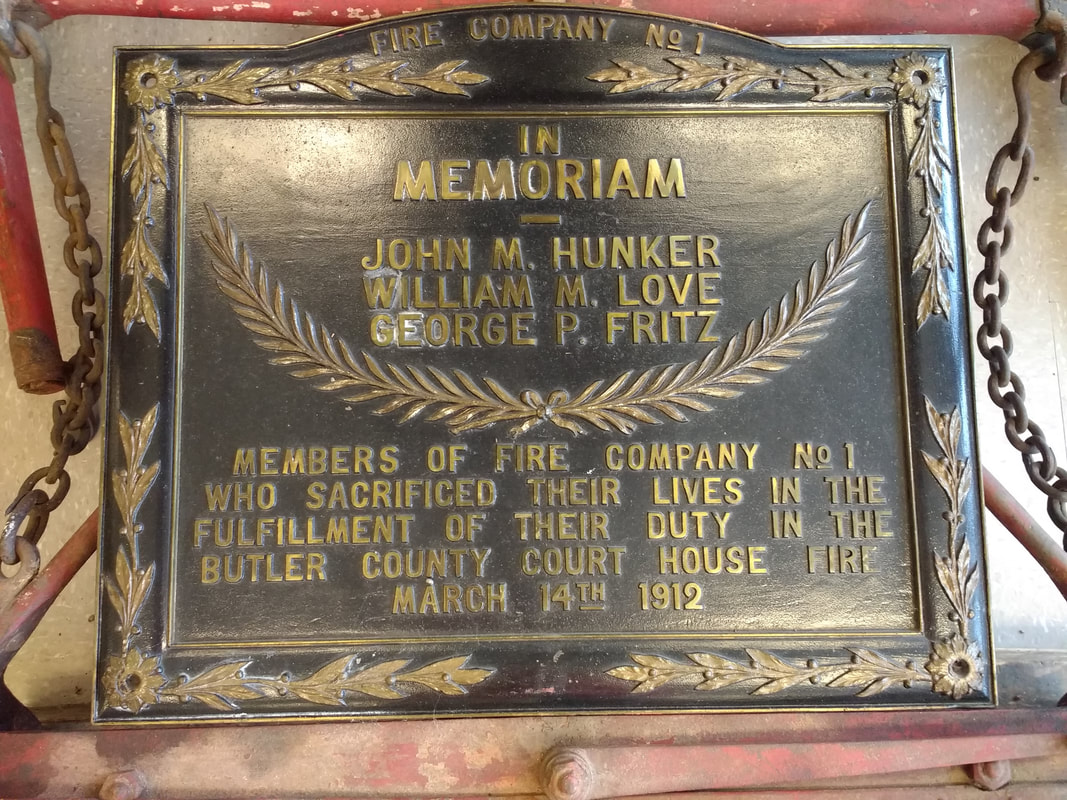
The first tablet Rudolph Thiem designed for the three firemen was dedicated on August 6, 1912, and hung in the fire station of Company No. 1. Today, it is displayed in the Central Fire Station in Hamilton, Ohio. Photo is courtesy of Barb and Bill Schlichter.
|
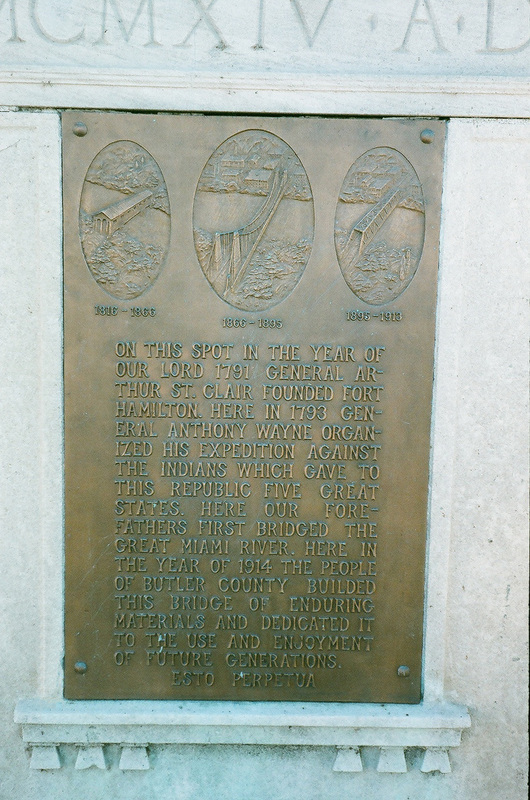
A bronze tablet depicting the three bridges that, in succession, crossed the Great Miami River from 1816-1913. The tablet also celebrates the construction of the new bridge, begun in 1914 and completed in 1915. (See the photo of this bridge’s construction on the page for “Billy Yank,” who is seen to the right.). Thiem was awarded the commission in July 1915. The Estate Stove Company, the new name of Thiem’s old employer, cast the piece. On February 18, 1916, the tablet was placed on the “Watch House” of Fort Hamilton. This architectural simulation of the old Fort stands next to the new bridge.
|
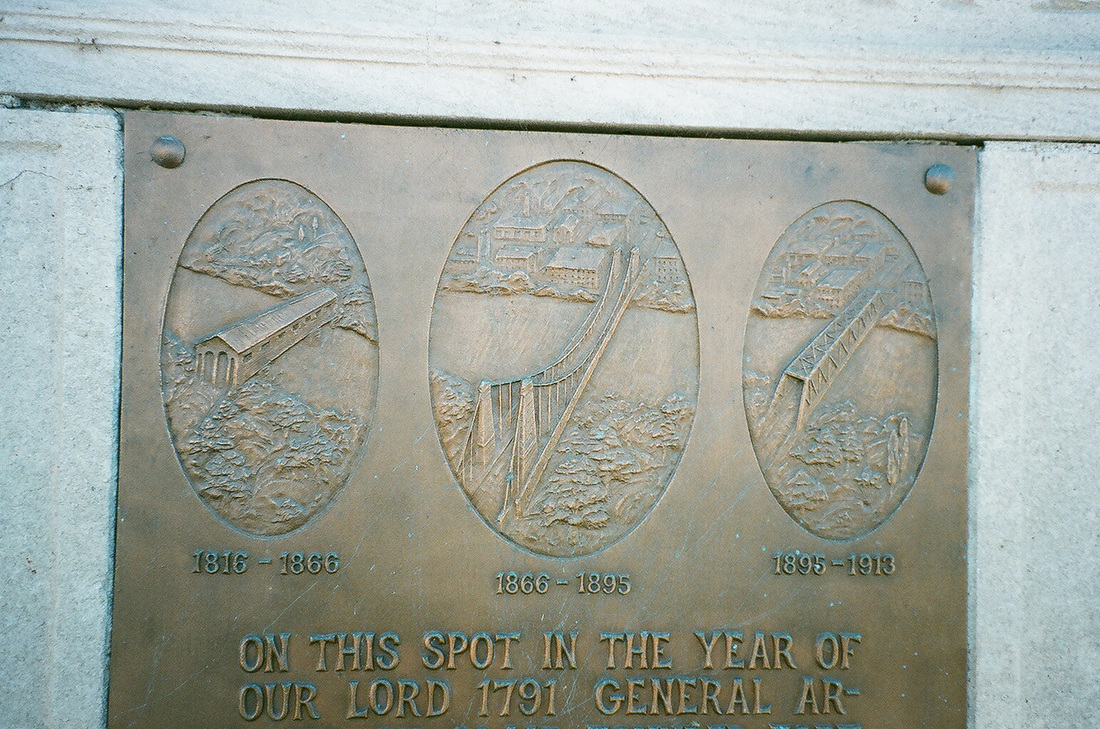
Detail of the three bridges. Photo by Jon Thiem.
|
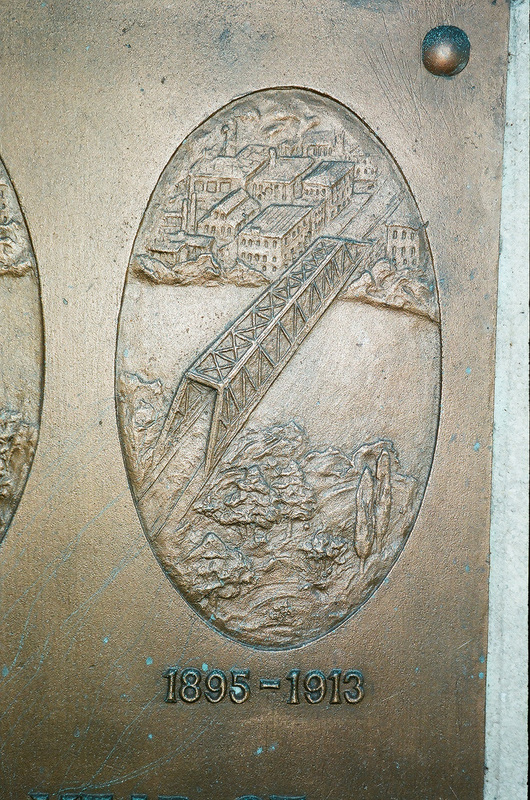
Detail of the truss bridge, destroyed in the flood of 1913. Photo by Jon Thiem.
|
The devastating rise of the Great Miami River that occurred on March 25, 1913, claimed many lives, and destroyed the truss bridge connecting Hamilton and Rossville. That bridge is the third from the right in the tablet. The covered bridge, shown on the left, was the first one to cross the river, whose flood water destroyed it as well.
The sculptor’s low relief presentation offers aerial views of the three earlier bridges, framed by ovals and all seen from the same perspective. This method highlights the different bridge-making technologies of each era. Thiem’s depiction of the three bridges shows the human capacity to rebuild after great loss, and yet the need for three successive bridges reminds viewers of the force and terror of unbridled water.
Thiem’s composition rested on first-hand experience. The flood of 1913 hit his studio and swept away his tools, models, and the letters he had received from presidents (Eaton, “Sculpting a Legacy.” Journal News, 10/2/1988, B2). For a picture of Thiem’s studio after the flood, see the page entitled Life.
The sculptor’s low relief presentation offers aerial views of the three earlier bridges, framed by ovals and all seen from the same perspective. This method highlights the different bridge-making technologies of each era. Thiem’s depiction of the three bridges shows the human capacity to rebuild after great loss, and yet the need for three successive bridges reminds viewers of the force and terror of unbridled water.
Thiem’s composition rested on first-hand experience. The flood of 1913 hit his studio and swept away his tools, models, and the letters he had received from presidents (Eaton, “Sculpting a Legacy.” Journal News, 10/2/1988, B2). For a picture of Thiem’s studio after the flood, see the page entitled Life.
|
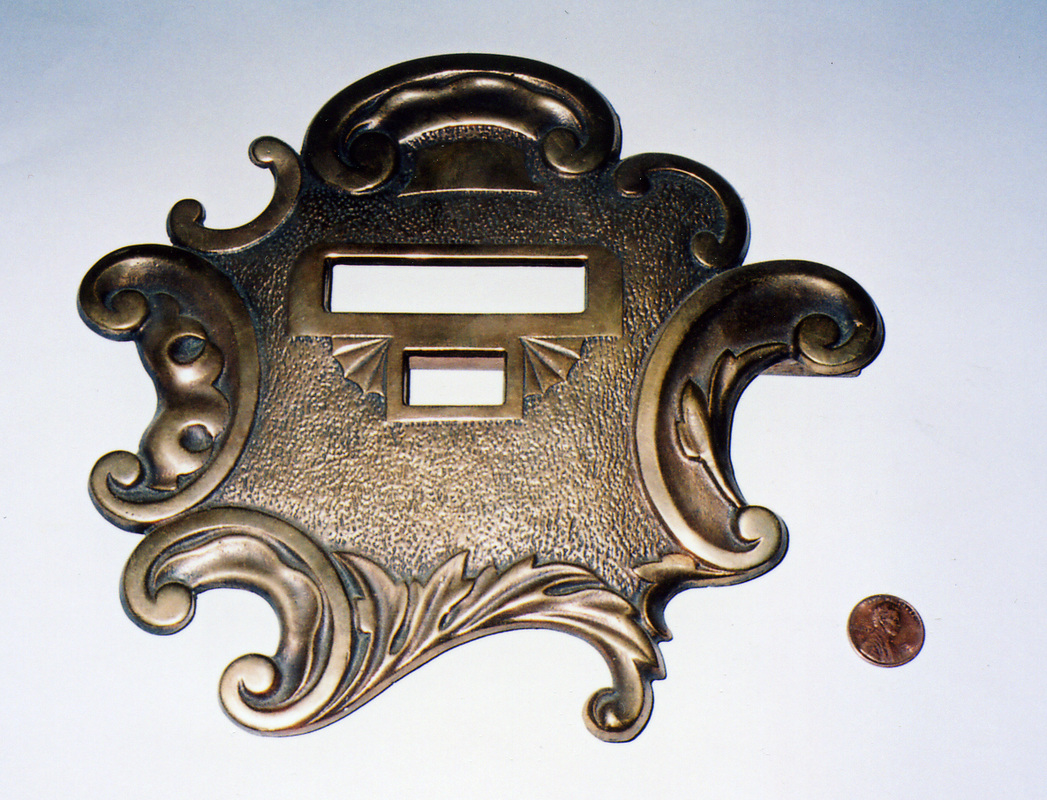
This fixture to the right is a rare example of Thiem’s work as an industrial artist of domestic articles. It held a rotating calendar, showing the day, month and year in the rectangular slots. The stylized leaf framing the bottom of the holder resembles the leaf decoration on the mirrored hall stand shown in the next section "Works in Wood." The calendar holder is undated, but the art nouveau features suggest it was produced around 1900 or later. In that period much of Thiem’s work came from design contracts for various Hamilton foundries and factories, such as Duemer Pattern Works (“Thiem’s Life” p. 5).
|
|
Works in Wood
Almost all Thiem’s surviving wood carvings and “art furniture” come from his own household or the households of his three children. Like other carvers of the time, he rarely signed his commissioned pieces, so it is difficult to document them. As a result, his work in this medium is hardly known. Yet woodcarving was an important part of his business. He billed himself both “designer” and “wood carver,” (for example in the 1900-1901 Hamilton City Directory). The purpose of this section is to introduce website visitors to Thiem’s accomplishments as a woodcarver. Because almost all of his carvings remain in private collections, neither the broader public nor scholars have had access to the works shown below.
Besides projects done in Hamilton, Thiem had commissions from St. George’s Catholic Church, Cincinnati (pews and confessionals), from Powel Crosley, Jr., for Pinecroft, the Crosley estate in Cincinnati (a pair of oak lions), from a bank in China (lettering), and from Panama.
For display or use in his own home, Thiem carved a variety of objects including candle holders, plant stands, valances, picture frames, serving dishes, a jewel box, a decorative chair, a "swan table" and a mirrored hall stand.
The carving of oakwood was his speciality. A number of the photos on this page show his mastery in this difficult medium. Oak has a tendency to splinter under the carver’s chisel, and yet the artist can use its intricate grain and “tiger” markings to captivate the human eye.
This sampling of Thiem’s woodcarving shows his delight in playful composition and intricate ornament.
Besides projects done in Hamilton, Thiem had commissions from St. George’s Catholic Church, Cincinnati (pews and confessionals), from Powel Crosley, Jr., for Pinecroft, the Crosley estate in Cincinnati (a pair of oak lions), from a bank in China (lettering), and from Panama.
For display or use in his own home, Thiem carved a variety of objects including candle holders, plant stands, valances, picture frames, serving dishes, a jewel box, a decorative chair, a "swan table" and a mirrored hall stand.
The carving of oakwood was his speciality. A number of the photos on this page show his mastery in this difficult medium. Oak has a tendency to splinter under the carver’s chisel, and yet the artist can use its intricate grain and “tiger” markings to captivate the human eye.
This sampling of Thiem’s woodcarving shows his delight in playful composition and intricate ornament.
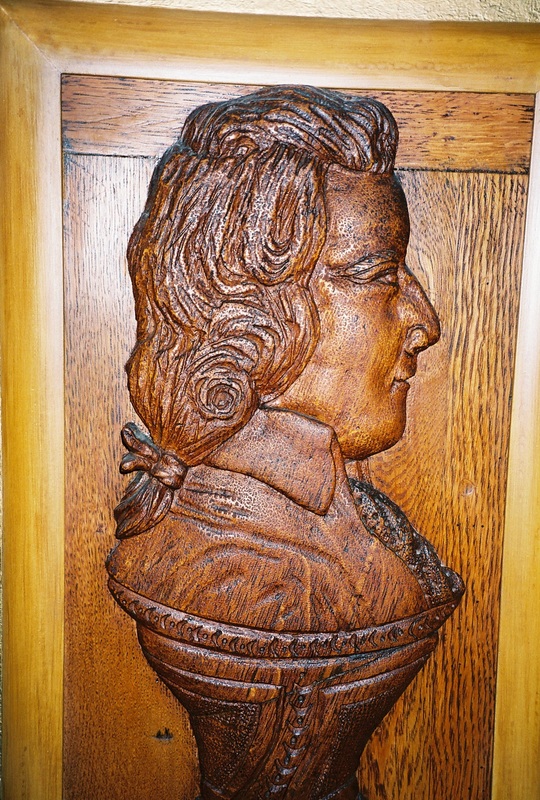
This detail of a carved oak relief represents a bust of Mozart, paired with a relief of Beethoven. These were panels made for the doors of a “music cabinet” that held cylinder recordings. Hamilton, Ohio. The undated panels probably belong to the early twentieth century. The heyday of cylinder recordings extended from the late 1890s to the mid 1910s. Thiem drew on conventional images of Mozart and Beethoven, but the bust treatment and overall design are distinctive. The facial expressions Thiem gives Beethoven and Mozart stand for the contrasting emotions of music: sadness and joy, perturbation and ironic distance. This panel set represents one of the few known carving projects Thiem executed for a private individual. Another craftsman framed the panels. Photo by Jon Thiem. Courtesy of Stan Jordan.
|
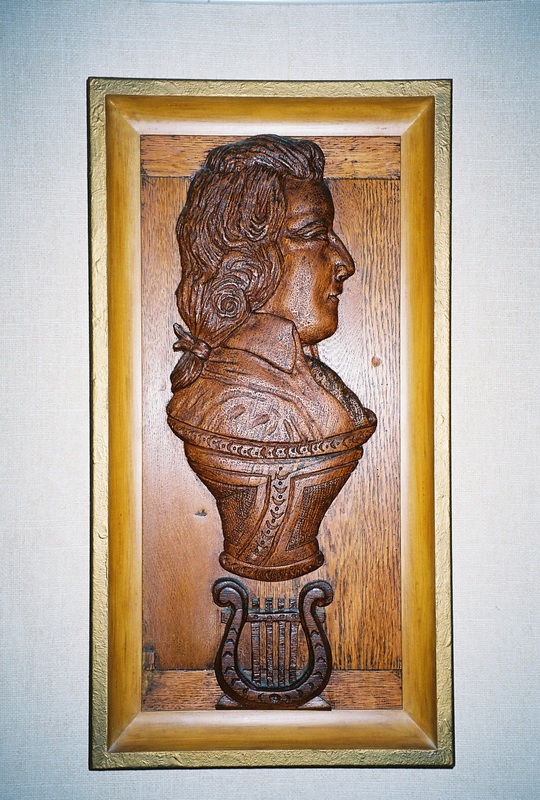
The entire panel. Mozart. Photo by Jon Thiem. Courtesy of Stan Jordan.
|
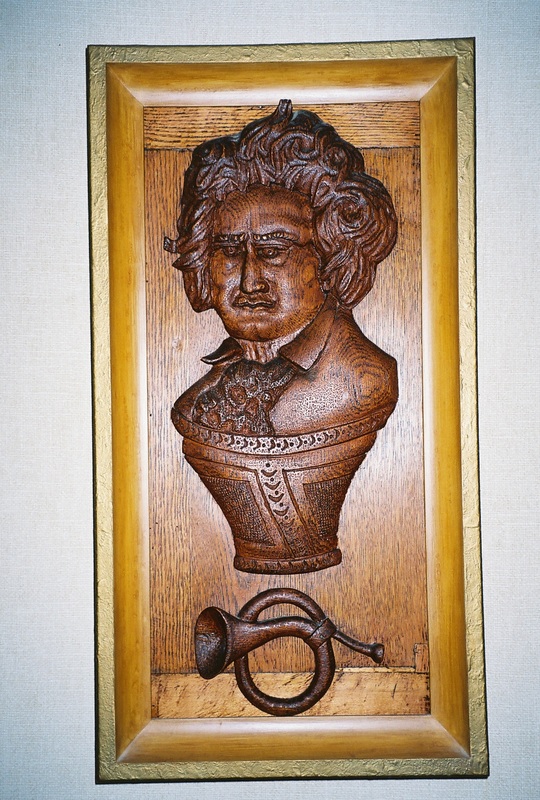
Undated The entire panel. Beethoven. Photo by Jon Thiem. Courtesy of Stan Jordan.
|
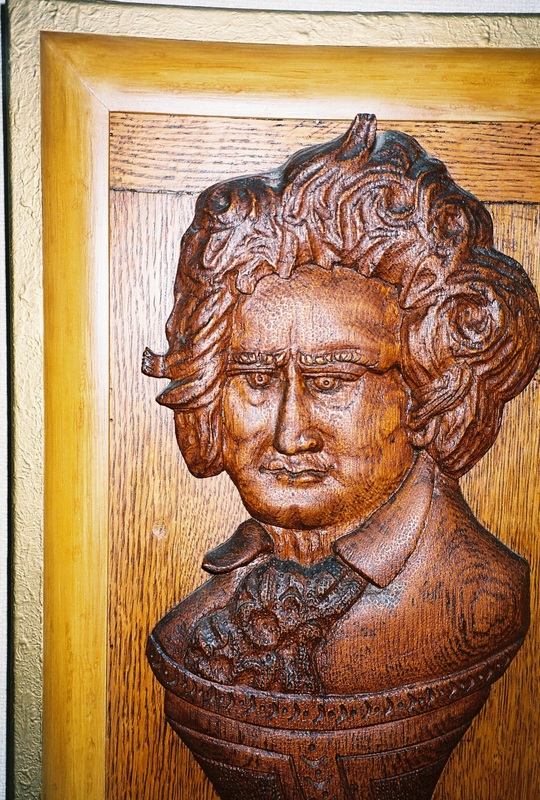
Detail of the Beethoven panel. Photo by Jon Thiem. Courtesy of Stan Jordan.
|
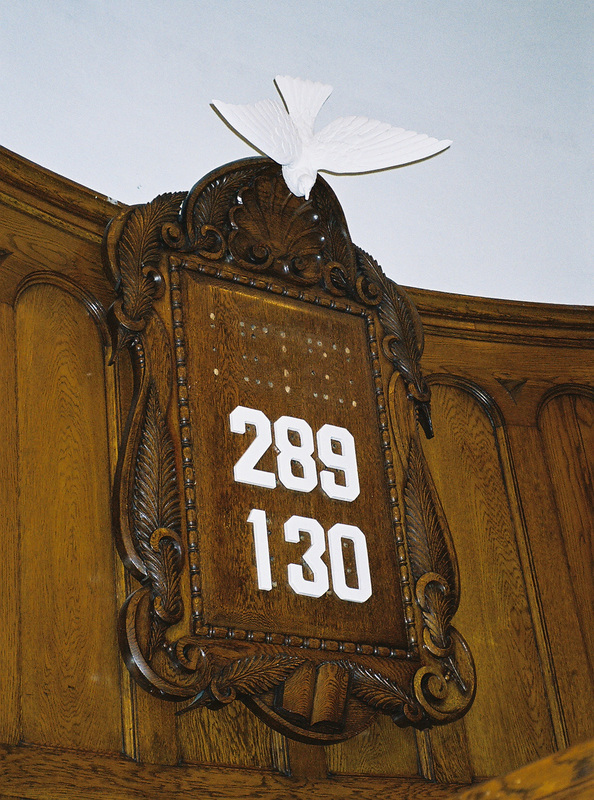
This hymnboard or songboard from St. John’s Evangelical-Protestant Church, Hamilton, Ohio, is carved oak. Undated and unsigned, it measures 45 1/2 by 30 inches, with an average depth of 1 1/2 inches. The hymnboard hung above and behind the altar and pastor’s lectern. Thiem probably carved the hymnboard after 1904. He later added the lifesize carved dove, painted white, as a memorial to his wife Anna, who died in 1907, at the age of 37. The dove is a traditional symbol of the Holy Spirit, and, through the Noah story, of hope. Photo by Jon Thiem.
|
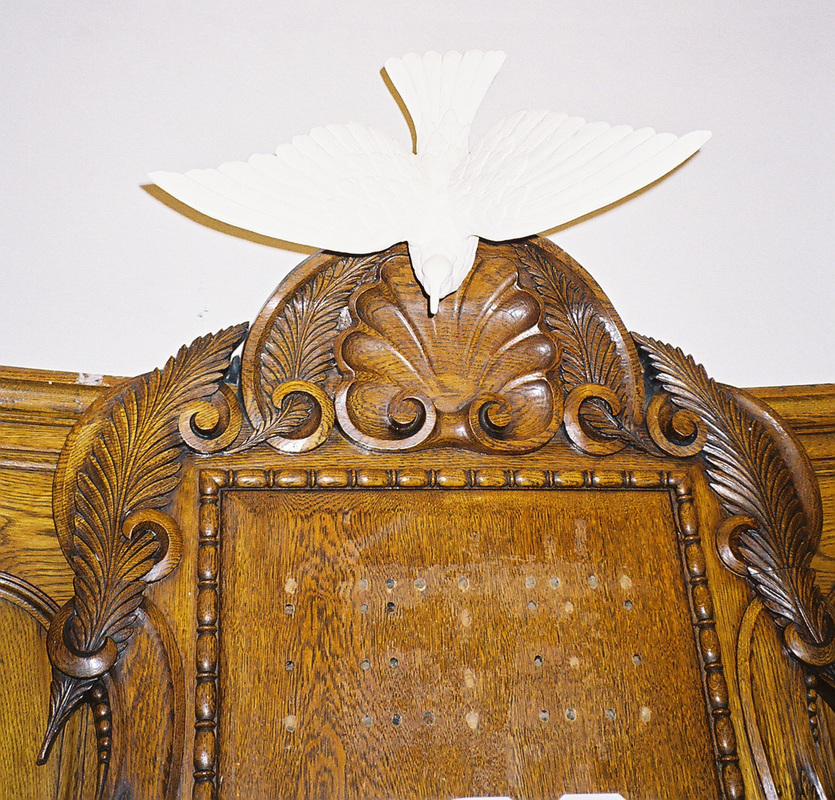
Detailed view, upper part of the hymnboard, showing the interlacing of scroll figures and palm leaves. The palm leaf is a traditional symbol of the Christian’s triumph over death. Photo by Jon Thiem.
|
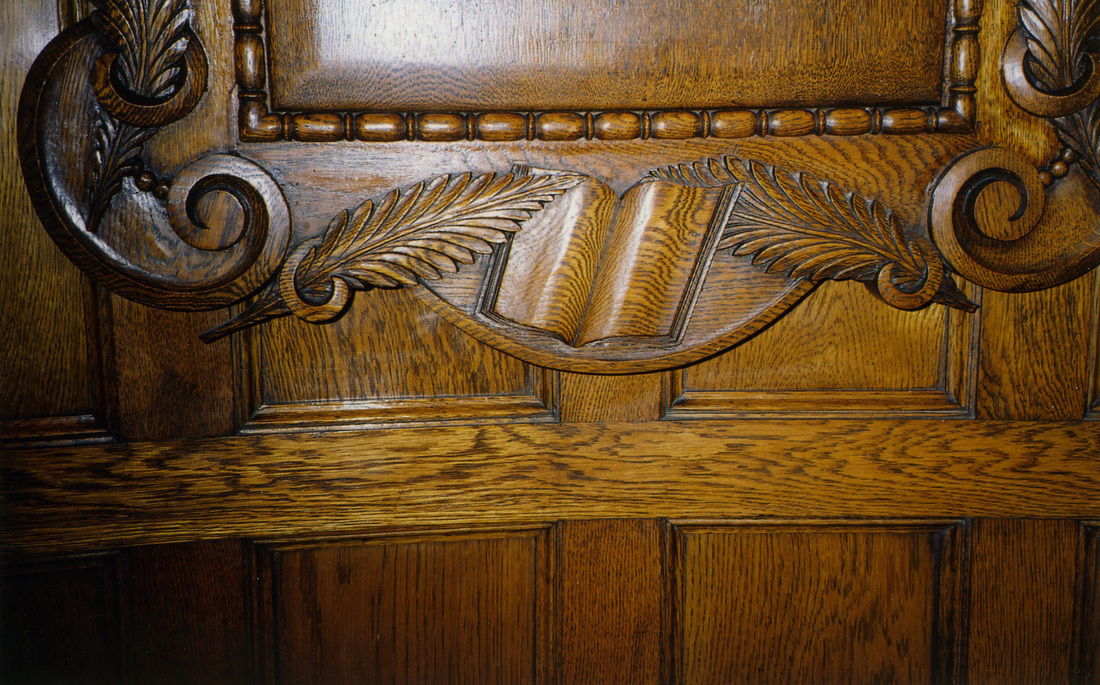
This photo shows the ingenious way in which Thiem used the grain of the oak to simulate the lines of the (hymn) book. He carved a book with bulging pages in order to make the curving grain of the wood look like lines. Photo by Jon Thiem.
|
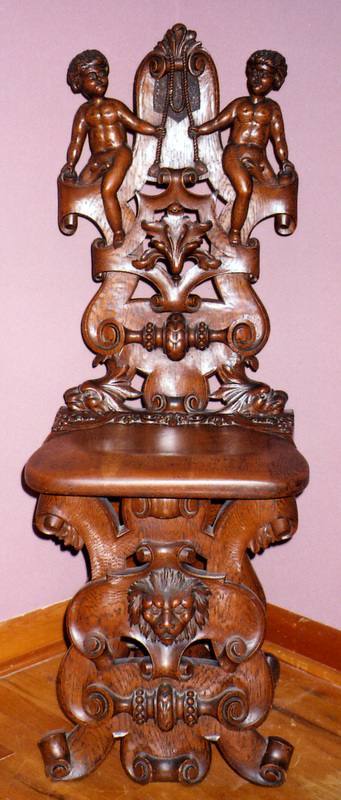
Rudolph Thiem carved this oak chair for his daughter Alma Thiem, as a wedding present. She was married in November, 1913. This is Thiem’s most elaborate piece of carved oak. The chair displays features of the Renaissance revival style that Thiem absorbed as a student in Berlin. The two animal heads on the lowest part of the back of the chair belong to griffins, mythological beings with the body of a lion and the head and wings of an eagle. They combine the powers of the ruling animals of air and land.
|
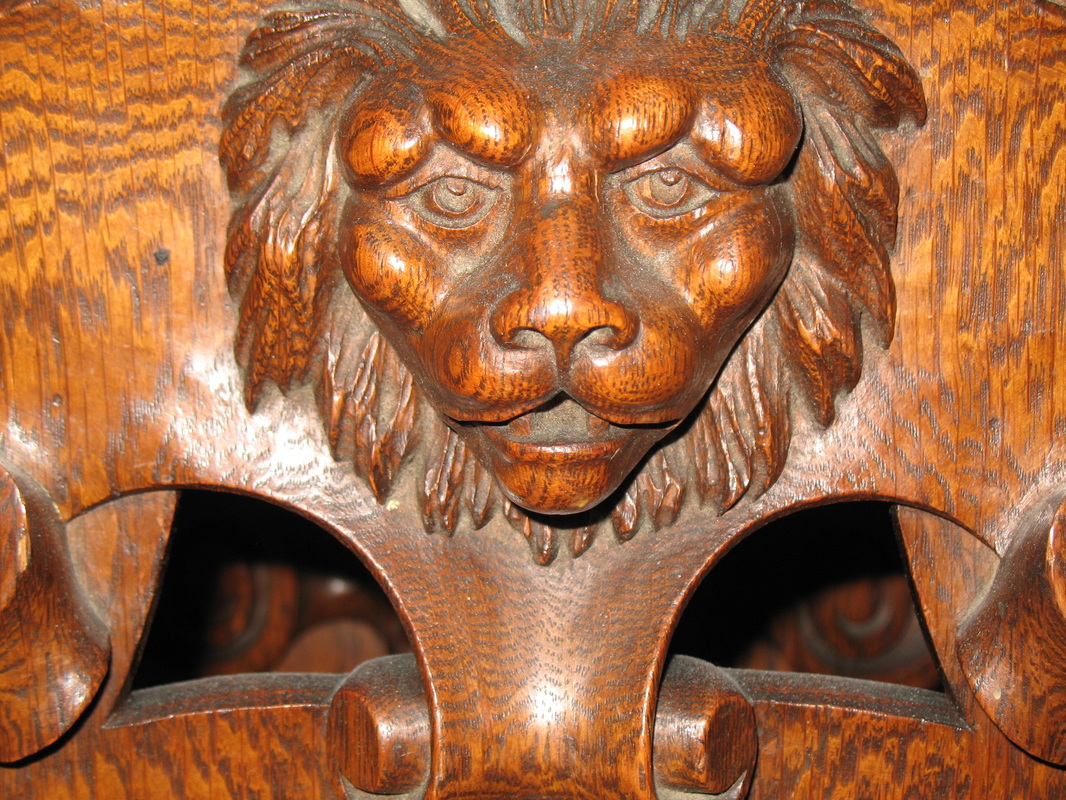
Head of the lion head on the oak chair. Thiem liked depicting lions. One of his earliest known Hamilton pieces is the fire basket (now lost) shown on the Stove Design page. The top of the fire basket’s front legs are two lions. The last pieces he was working on when he died were a pair of oak lions for the Crosley (Pinecroft) estate (mentioned on the Home Page). Thiem gives the lion of the oak chair an almost human expression. Photo by Jon Thiem.
|
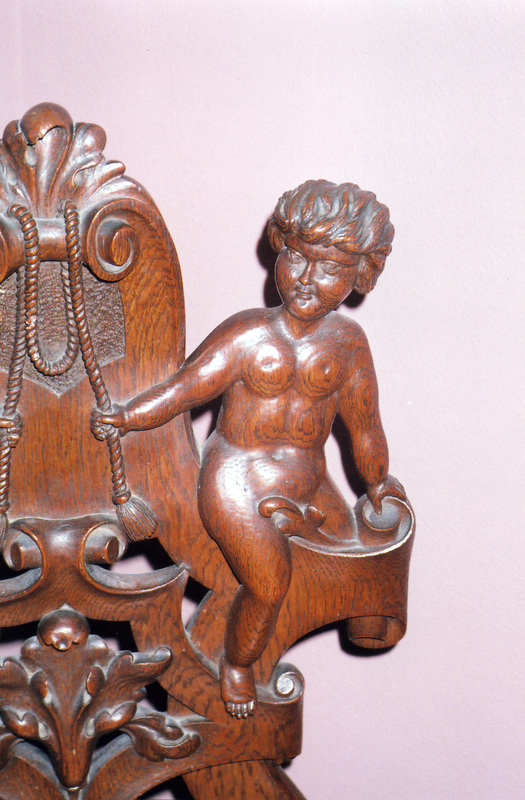
Detail. One of a pair of nuptial cherubs on the upper middle part of the chair’s back. Photo by Jon Thiem.
|
|
|
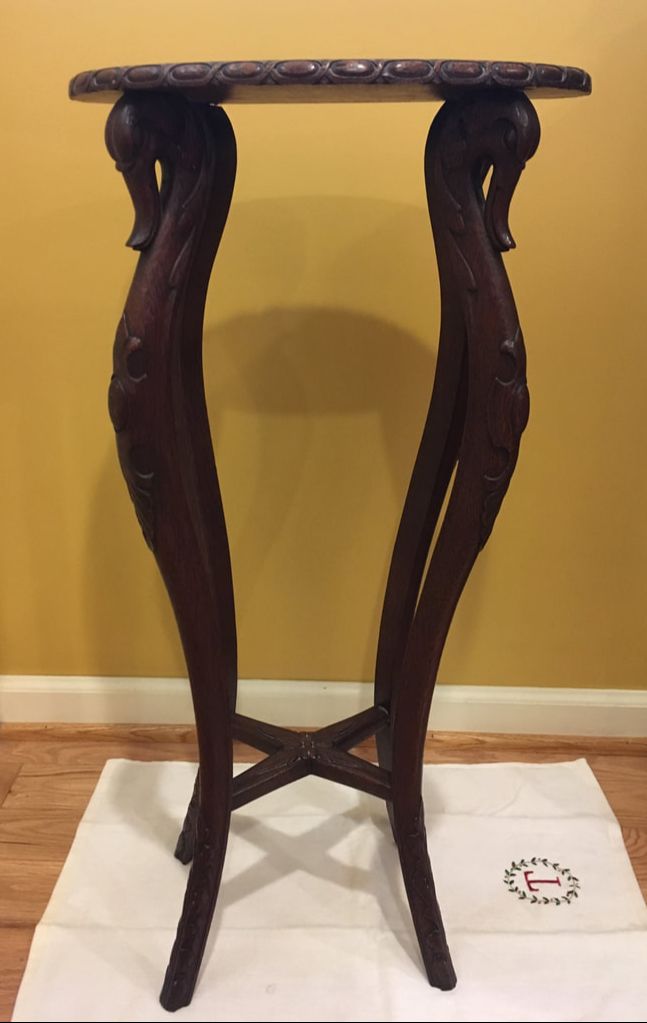
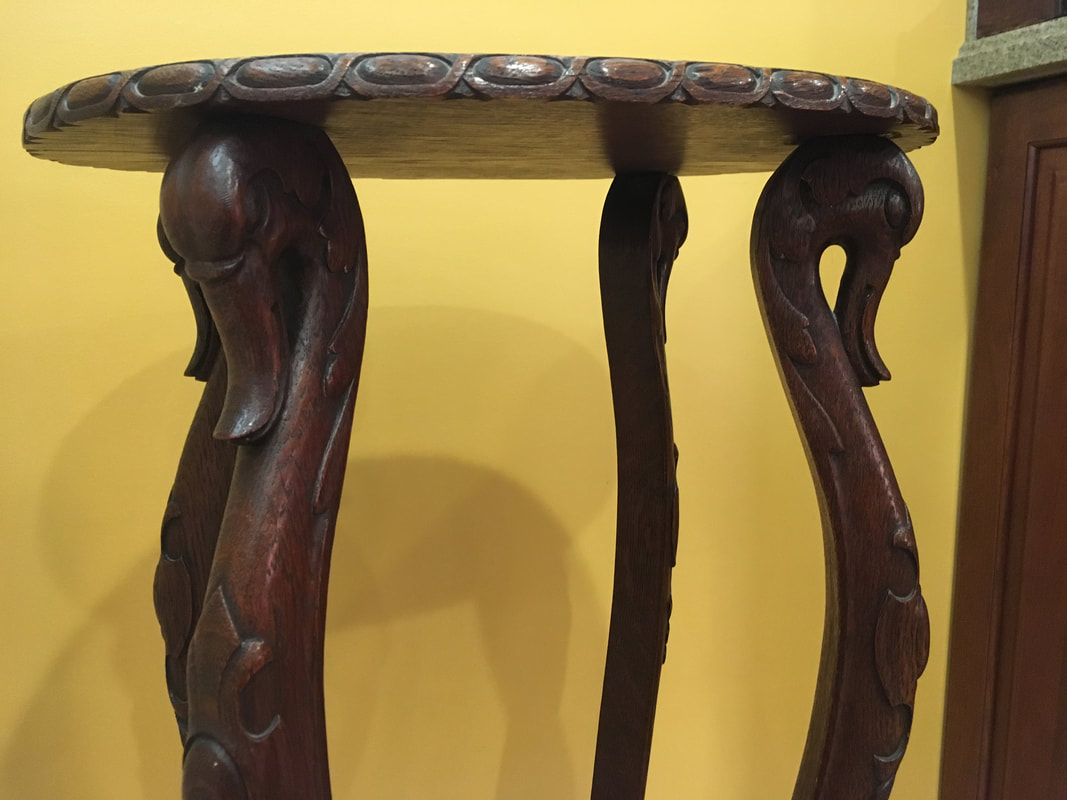
This carved oak table shows Rudolph Thiem's abiding fascination with the swan as ornament. Another example is the "Swan Stove" designed for the Kahn Brothers' foundry, shown on the Home and the Stove Design pages of this site. "Swan tables" were popular in the 19th century. Thiem makes several bold innovations in this genre. Photos by Natalie Bolton, by permission of Dave and Lana Thiem.
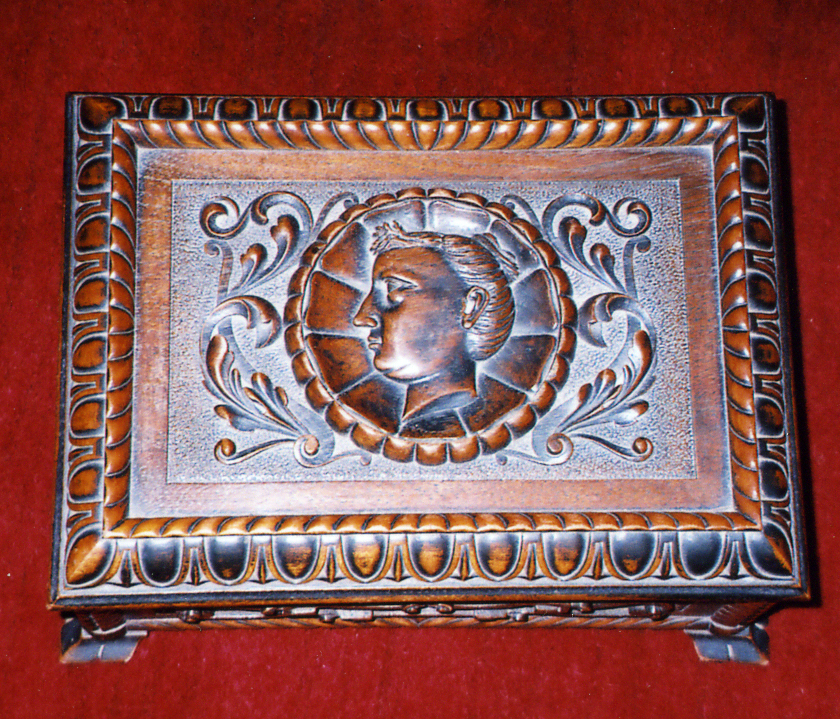
A jewelry box, carved in oak. The profile in relief is the sculptor’s wife, Anna Thiem. The box measures 10 1/4 by 7 1/2 inches, and is 4 1/4 high. It was a gift from Rudolph, presented to Anna on her 24th birthday, September 4, 1893. Thiem depicted his wife as a mature Roman matron in the realist manner of Roman portrait sculpture. The use of acanthus leaves and the treatment of the neck, with its three-dimensional truncation, are classical conventions. Photo by Jon Thiem.
|
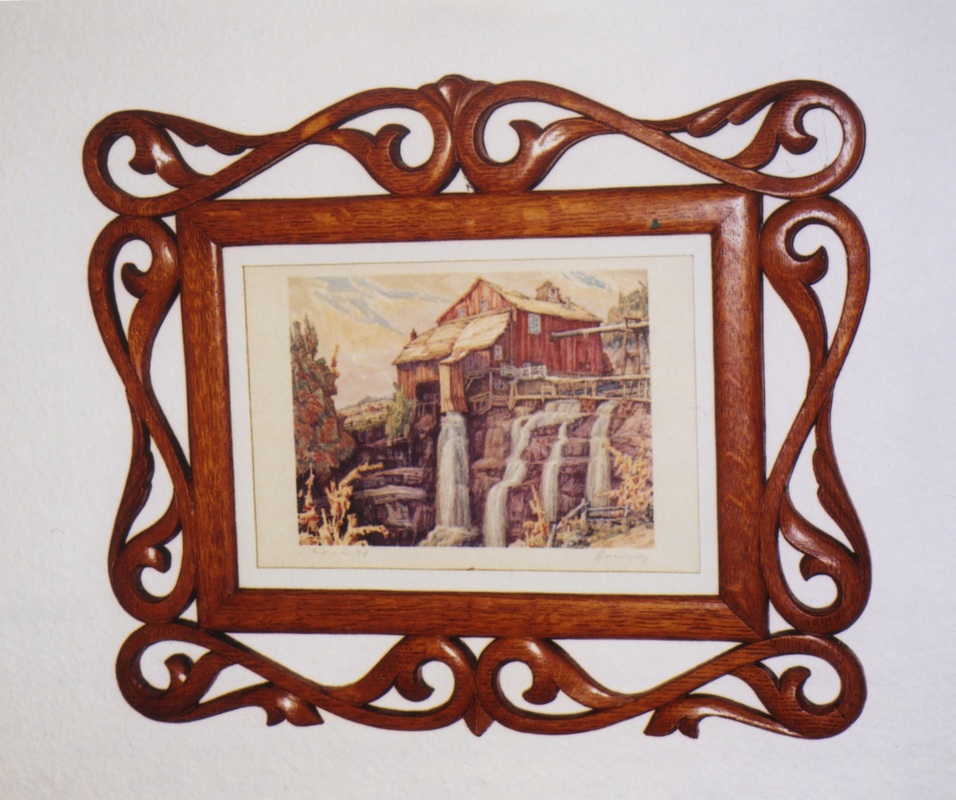
Picture frame in oak. 13 1/4 by 11 inches. The sculptor gave this frame to his good friend, Chris Kaefer of Hamilton. According to Kaefer’s granddaughter, Adeline Maggart, Thiem carved the frame “as early as 1900 or before.” This frame, and the two following, are so convoluted and assertive that they virtually upstage the pictures they enclose. The surrounding ornament overwhelms the subject it supposedly presents. It is tempting to see in this paradox the playful and witty side of Thiem’s character. Perhaps the sculptor in Thiem wanted the three-dimensional frame to triumph over the illusory two-dimensional world of the painter (or photographer or engraver). Traditionally, sculptors and painters saw themselves as rivals. It is well to remember that in Berlin the young sculptor specialized in the carving of mirror and picture frames. Photo by Jon Thiem.
|
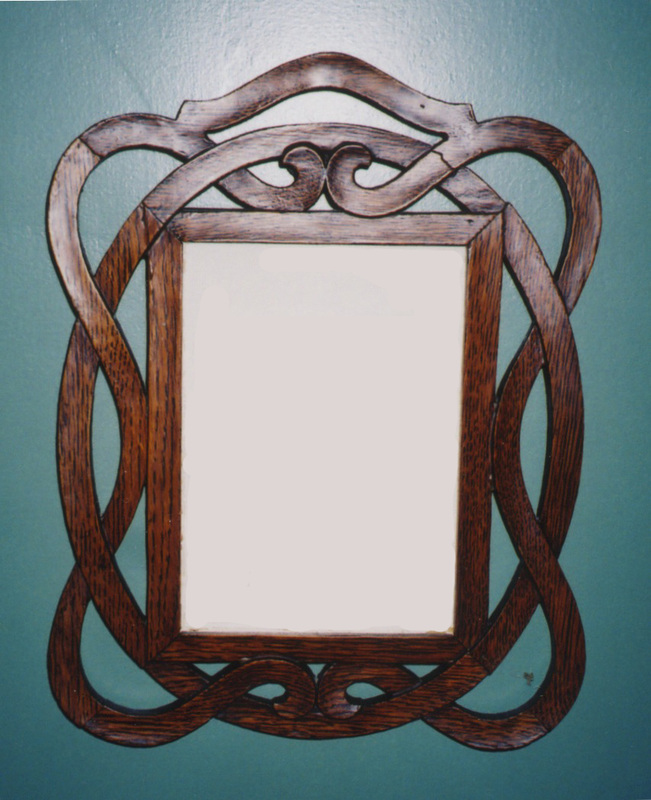
Oak picture frame. Date unknown. A square frame is enclosed by an oval frame which is in turn enclosed by, and assymetrically interlaced with, serpentine or sygmoidal forms. This photograph clearly shows the glue joints of the carved frame pieces. In the upper right section, one can see the place where a piece got broken at some point. Photo by Jon Thiem.
|
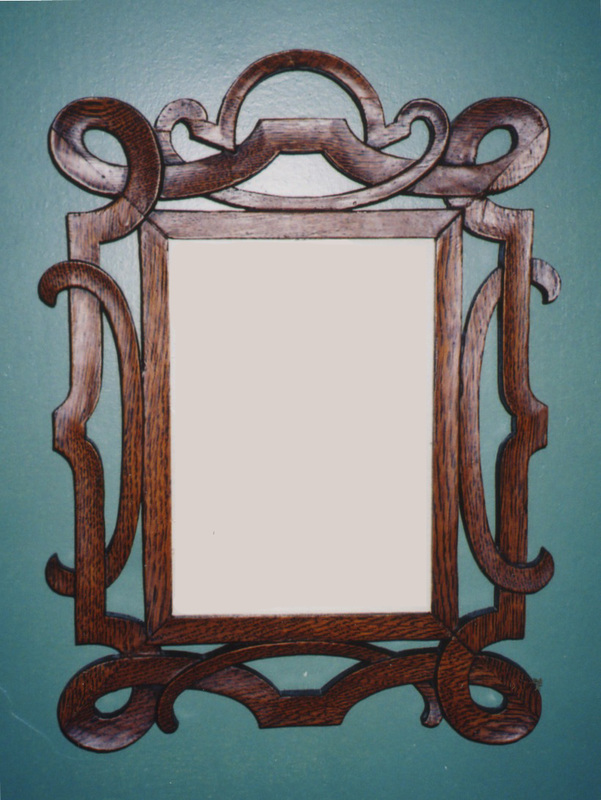
Oak picture frame. Date unknown. Photo by Jon Thiem.
|
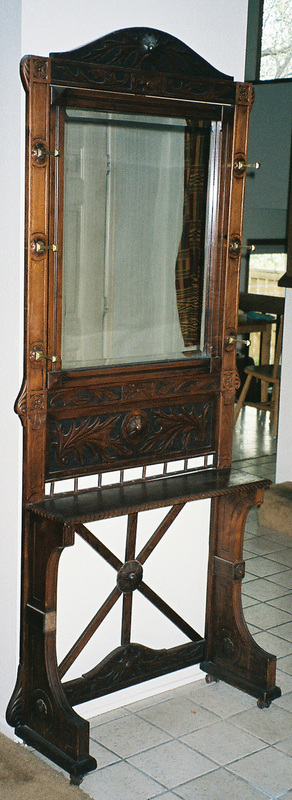
Mirrored hall stand, with bronze pegs. Date unknown. Walnut. This hall stand stood in the entry way of Thiem’s house in Hamilton, on North D Street. It is well to remember that in Berlin the young sculptor specialized in the carving of mirror frames, but this is the only surviving example of his work in this genre. The ornamentation of the mirror frame is more subdued than that in the picture frames shown above—except in the apron (below the mirror), a panel where hall stand artisans typically gave more free rein to their imagination. Photo by Jon Thiem.
|
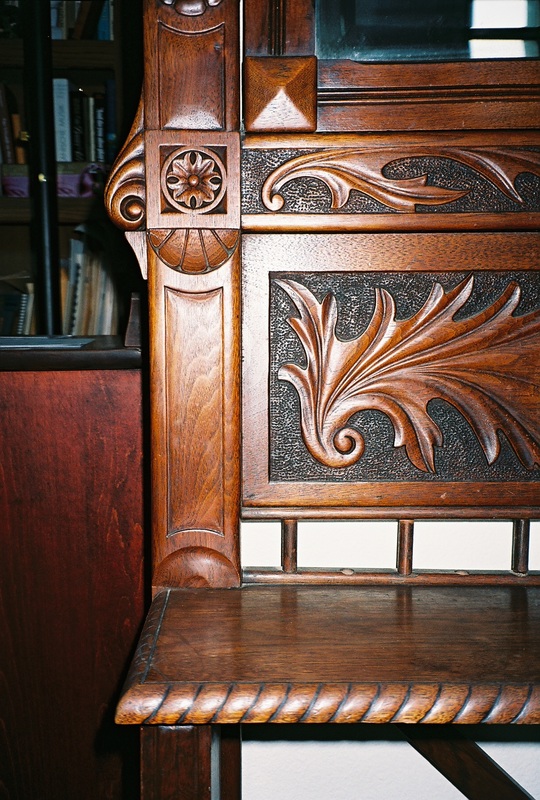
This detail shot of the hall stand’s apron highlights the craft of the carving, as well as the extravagantly stylized and distended leaves, which even this photograph could not encompass. Like other designers of his generation, Thiem often used foliage elements in his ornamental work. He had a love of tropical plants and turned his living room into a greenhouse in the winter months. The larger distended leaf in the apron is reminiscent of the lower leaf in the bronze calendar holder, shown above. Photo by Jon Thiem.
|
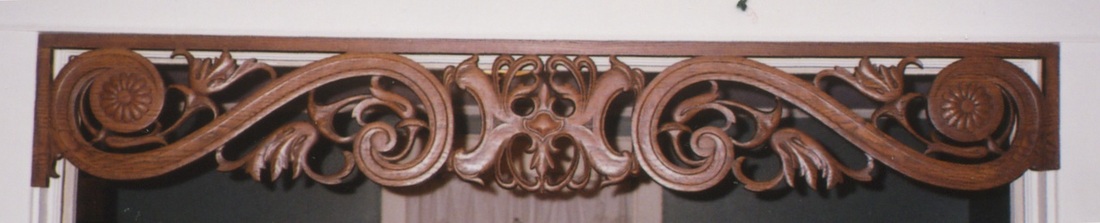
Alma Thiem owned this wood valance and used it in her home in Cincinnati. It measures 72 by 11 inches and is about 3/4 inch thick. Her father may have carved the valance in 1913, when Alma moved into a home of her own. Two large sygmoidal curves border the face of a fabulous being, reminiscent of those seen in ancient or Asian art. The stylized flowers evoke ancient Egypt.
|
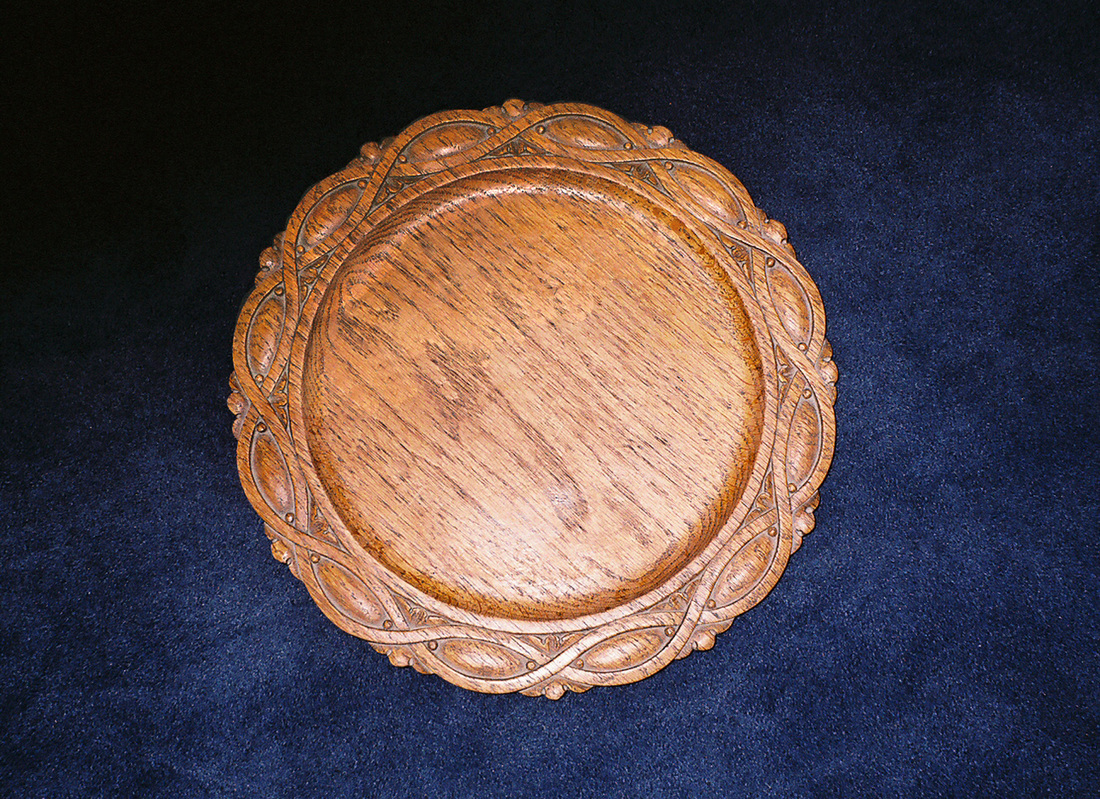
Round salver. Oak. Date unknown. One of the extant domestic objects Thiem made for his household. This salver was probably a display piece. Its elegant simplicity contrasts with the opulence of other domestic objects he designed. Photo by Jon Thiem.
|
